Week Sixteen (2017.6.1)
- Jun 08 Thu 2017 11:12
-
Literature and Film week 16
- Jun 08 Thu 2017 11:11
-
Literature and Film week 15
Week Fifteen (2017.5.25)
- Jun 08 Thu 2017 11:10
-
Literature and Film week 14
Week Fourteen (2017.5.18)
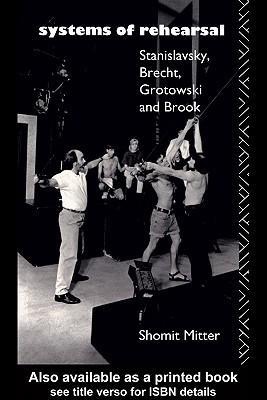
Bertolt: a German poet, playwright, and theatre director of the 20th century. He made contributions to dramaturgy and theatrical production, the latter through the tours undertaken by the Berliner Ensemble – the post-war theatre company operated by Brecht and his wife, long-time collaborator and actress Helene Weigel.
Cerberus: the monstrous multi-headed dog that guards the gates of the Underworld to prevent the dead from leaving. Cerberus was the offspring of the monsters Echidna and Typhon, and usually is described as having three heads, a serpent for a tail, and snakes protruding from parts of his body. Cerberus is primarily known for his capture by Heracles, one of Heracles' twelve labours.
- Jun 08 Thu 2017 11:09
-
Literature and Film week 13
Week Thirteen (2017.5.11)
- Jun 08 Thu 2017 10:11
-
Literature and Film week 12
Week Twelve (2017.5.4)
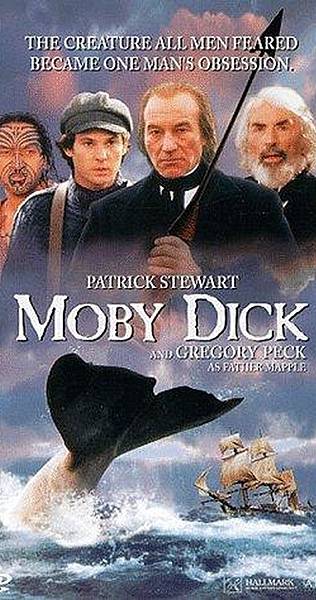
Moby Dick: a novel by American writer Herman Melville, published in 1851 during the period of the American Renaissance. Sailor Ishmael tells the story of the obsessive quest of Ahab, captain of the whaler the Pequod, for revenge on Moby Dick, the white whale that on the previous whaling voyage bit off Ahab's leg at the knee. The novel was a commercial failure and out of print at the time of the author's death in 1891, but during the 20th century, its reputation as a Great American Novel was established. William Faulkner confessed he wished he had written it himself, and D. H. Lawrence called it "one of the strangest and most wonderful books in the world", and "the greatest book of the sea ever written". "Call me Ishmael" is among world literature's most famous opening sentences.
The Open Boat (SparkNotes): a short story by American author Stephen Crane (1871–1900). First published in 1897, it was based on Crane's experience of surviving a shipwreck off the coast of Florida earlier that year while traveling to Cuba to work as a newspaper correspondent.
Naturalism (heredity, environment): a literary movement that emphasizes observation and the scientific method in the fictional portrayal of reality. Novelists writing in the naturalist mode include Émile Zola (its founder), Thomas Hardy, Theodore Dreiser, Stephen Crane, and Frank Norris.
- Jun 05 Mon 2017 12:29
-
Literature and Film Week 11
Week Eleven (2017.4.27)
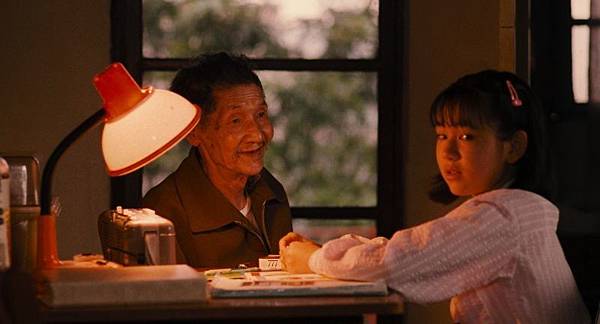
W: a 2016 South Korean television series, starring Lee Jong-suk and Han Hyo-joo. It aired on Wednesdays and Thursdays at 22:00 (KST) on MBC from July 20 to September 14, 2016.
Movie review: beginning to think→ preparing to watch→ starting to write
Six approaches: film history/ national/ cinemas/ genres/ auteurs/ kinds of formalism/ ideology
- Jun 05 Mon 2017 12:13
-
Literature and Film Week 10
Week Ten (2017.4.20)
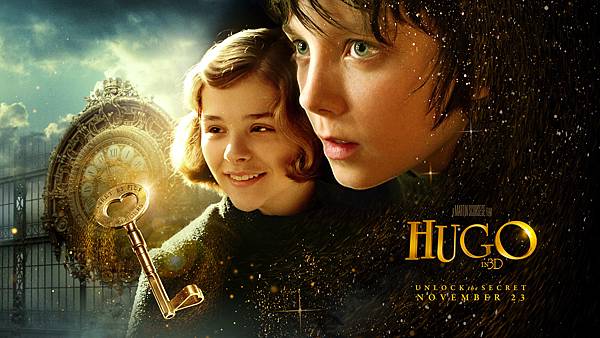
Hugo: a 2011 historical adventure drama film directed and co-produced by Martin Scorsese and adapted for the screen by John Logan. Based on Brian Selznick's book The Invention of Hugo Cabret, it is about a boy who lives alone in the Gare Montparnasse railway station in Paris in the 1930s. A co-production between Graham King's GK Films and Johnny Depp's Infinitum Nihil, the film stars Ben Kingsley, Sacha Baron Cohen, Asa Butterfield, Chloë Grace Moretz, Ray Winstone, Emily Mortimer, Jude Law, Helen McCrory, and Christopher Lee.
The Curious Case of Benjamin Button: a 2008 American romantic fantasy drama film directed by David Fincher. The storyline by Eric Roth and Robin Swicord is loosely based on the 1922 short story of the same name by F. Scott Fitzgerald. The film stars Brad Pitt as a man who ages in reverse and Cate Blanchett as the love interest throughout his life.
- May 31 Wed 2017 23:41
-
Literature and Film Week 9

Week Nine (2017.04.13)
1. vocabulary:
pre-: prior to/ before
pos-: subsequent to/ after
horizon vs. vertical
- May 16 Tue 2017 15:52
-
Literature and Film Week 8

Week Eight (2017.4.6)
1. fid-: trust, believe
infidelity: lack of belief in a religion
simu-, syn-: in the same time
a-, non-: negative
- May 16 Tue 2017 14:14
-
Literature and Film Week 7
Week Seven (2017.3.30)
1. realism: literary realism, in contrast to idealism, attempts to represent familiar things as they are
naturalism: a literary movement that emphasizes observation and the scientific method in the fictional portrayal of reality
neorealism: they set out to explore the spirit of their age through the shapes and colours of daily life
surrealism: a cultural movement that began in the early 1920s, and is best known for its visual artworks and writings. The aim was to "resolve the previously contradictory conditions of dream and reality into an absolute reality, a super-reality"
- May 08 Mon 2017 14:57
-
Literature and Film Week 6

Week Six (2017.3.23)
1. Les Misérables: a French historical novel by Victor Hugo, first published in 1862, that is considered one of the greatest novels of the 19th century. In the English-speaking world, the novel is usually referred to by its original French title. However, several alternatives have been used, including The Miserables, The Wretched, The Miserable Ones, The Poor Ones, The Wretched Poor, The Victims and The Dispossessed.
Les Misérables (musical):a sung-through musical based on the novel Les Misérables by French poet and novelist Victor Hugo. Premiering in Paris in 1980, it has music by Claude-Michel Schönberg and original French-language lyrics by Alain Boublil and Jean-Marc Natel, alongside an English-language libretto with accompanying English-language lyrics by Herbert Kretzmer.
Les Misérables (2012 film): a 2012 epic musical drama film directed by Tom Hooper and scripted by William Nicholson, Alain Boublil, Claude-Michel Schönberg, and Herbert Kretzmer, based on the musical of the same name by Alain Boublil and Claude-Michel Schönberg which is in turn based on the 1862 French novel by Victor Hugo. The film is a British and American venture produced by Relativity Media, Working Title Films and Cameron Mackintosh Ltd. and distributed by Universal Pictures. The film stars an ensemble cast led by Hugh Jackman, Russell Crowe, Anne Hathaway, and Amanda Seyfried. (IMDb with trailer) (1998)
- Apr 23 Sun 2017 00:10
-
Literature and Film Week 5

Week Five (2017.3.16)
1. Crazy, Stupid, Love: a 2011 American romantic comedy film directed by Glenn Ficarra and John Requa, written by Dan Fogelman, and starring Steve Carell, Ryan Gosling, Julianne Moore, Emma Stone, Marisa Tomei and Kevin Bacon. The film follows a recently divorced man who seeks to rediscover his manhood and is taught how to pick up women at bars. (IMDb with trailer)
2. Somewhere over the Rainbow: a ballad, with music by Harold Arlen and lyrics by Yip Harburg. It was written for the movie The Wizard of Oz (1939) and was sung by actress Judy Garland, in her starring role as Dorothy Gale. The song won the Academy Award for Best Original Song and became Garland's signature song, as well as one of the most enduring standards of the 20th century.
3. P.L. Travers: an Australian-born British novelist, actress and journalist. She is known best for the Mary Poppins series of children's books featuring the magical English nanny Mary Poppins.
Mary Poppins: a 1964 American musical-fantasy film directed by Robert Stevenson and produced by Walt Disney, with songs written and composed by the Sherman Brothers. The screenplay is by Bill Walsh and Don DaGradi, loosely based on P. L. Travers' book series Mary Poppins. The film, which combines live-action and animation, stars Julie Andrews in the role of Mary Poppins who visits a dysfunctional family in London and employs her unique brand of lifestyle to improve the family's dynamic. Dick Van Dyke, David Tomlinson, and Glynis Johns are featured in supporting roles. The film was shot entirely at the Walt Disney Studios in Burbank, California using painted London background scenes. (IMDb) (trailer) (2018)
